Hardware Guide
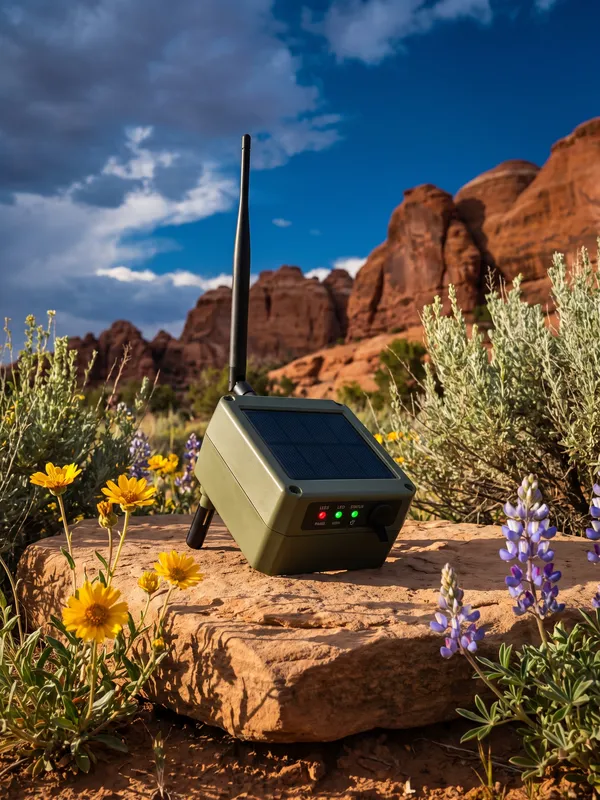
The sensor hardware
under test.
Every sensor node has a LoRa radio and acts as both a sensing unit and a relay. Most nodes need no internet — a few gateway nodes bridge the mesh to it. What this hardware can and cannot detect is an open question we're answering in public.
Base Radio
The Mesh Radio
The base radio runs Meshtastic firmware — open source, configurable via phone app in minutes. Both work out of the box with no firmware compilation required.
Pre-Assembled
LILYGO T-Echo
- LoRa + GPS
- NRF52 low-power chip
- Grove I2C expansion
- Battery-ready
- Meshtastic firmware
Pre-Assembled
LILYGO T-Beam Supreme
- LoRa + GPS
- Optional cellular
- Standard Meshtastic device
- Larger form factor
Environmental Sensors
What the Nodes Sense
Environmental sensors track temperature, humidity, pressure, particulates, and gases. Published federal research shows ground smoke sensors can beat satellites at detecting night smoldering and contained-fire smoke — that's the niche we're testing with open hardware. All sensors plug into the Grove port — no soldering.
BME688
$35-50
Measures
Temp, humidity, pressure, gas
Role
Gas sensing (VOC/CO/H₂) — one input under test. Its value as an outdoor fire signal is unknown and being measured in public.
BME680
$25-40
Measures
Temp, humidity, pressure, gas
Role
Alternative — lower cost with similar capability.
BME280
$8-12
Measures
Temperature, humidity, pressure
Role
Baseline layer — plugs into Grove port, no soldering. Serves as the false-positive reference on some test nodes.
Power System
Solar + Battery
Every node runs completely off-grid. The battery autonomy target is 2-3 days without sunlight — though whether a solar node can survive a Utah winter unattended is one of our open questions. In Utah's climate, manageable with a modest panel.
Sample — Node Cost Breakdown
Solar-powered sensor unit in weatherproof enclosure